Showing posts with label book review. Show all posts

Saturday, April 23, 2022

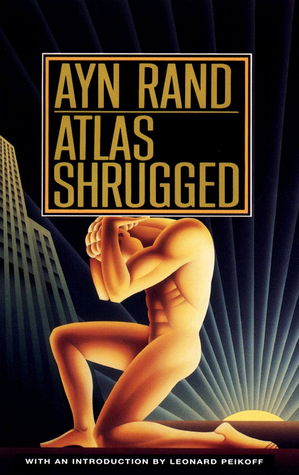
Book Review: Atlas Shrugged by Ayn Rand

The plot of the story is battle between the pure intellectuals and pure socialists. It describes at length about dispute between two extremes: socialism and objectivism. I found this hard to believe because if individuality is one aspect, then social responsibility is another. These two concepts do overlap at a certain point. Otherwise, without objective, you cannot earn a livelihood and still contribute to society.

Another problem I had reading this book is its enormous length; I felt it was overdone. Rand has used her power of vocabulary to describe same things again and again with different lines, different passages with different sub-plots which makes the chapters redundant. Hence it took me more than an year to finish reading it. From the beginning, all the chapters inch towards the climax: "This is John Galt Speaking"; this chapter could have been a hundred page novel all by itself. It doesn't strike the right chord just by repeatedly intensifying to same issue and drag it to this point. I was tired and almost ready to give up. The work could have been more engaging by being more concise. Yes; the major problem of this novel is its length. With all this criticism, I acknowledge that there are some notable quotes, eye catching lines and passages that really nudges your soul.

It would have been worth your time if the book was cut short to explain its principles, not otherwise. If you really want to enjoy reading Ayn Rand's work on objectivism, try The Fountainhead.

Tuesday, September 29, 2020

Book Review: Moriarty by Anthony Horowitz

Let me keep this short. I felt this novel is dragged. It could have been wrapped up a lot quicker than it is. But, I love the twist in this tale at the very end. I love stories with twists. Unlike the Sherlockian twist that the detective unfolds the mystery to his readers, I never foresaw a twist coming my way; and that's why it was quite an entertaining read. This is the time when I felt the drag made sense. Until this point, I felt it was moving rather slowly as the narrative seemed mundane, monotonous and unintelligent. There are some obvious loose ends as well. I think this kind of tone is deliberately set by the author for an explosive ending. Should the appearance of Sherlock Holmes took place anywhere but in the last chapter, then it would have spoiled the plot. It was a wise decision to make Holmes appear as part of a back story. Even though the story tries to set a darker tone with its gruesome scenes, it is not as good as the first: The House of Silk.


Monday, August 24, 2020

Book Review: The Fountains of Paradise by Arthur C. Clarke

It is one of the finest books ever written by Arthur C. Clarke. I enjoyed reading this book right from the start. It painted vivid images as I read the novel. It is undoubtedly a master class of writing in modern literature and a perfect example of aesthetic blending of historical and science fiction.

With increasing technology goes increasing vulnerability; the more Man conquers Nature the more liable he becomes to artificial catastrophes.
But man-made obstacles had never stopped him before. Nature was his real antagonist-the friendly enemy who never cheated and always played fair, yet never failed to take advantage of the tiniest oversight or omission.
Sir Arthur C. Clarke does not underestimate the knowledge of his readers, nor does he get carried away by writing pure science. The amusement is only grows as I rode on the Orbital Tower. The motive of the plot explores the themes of man's desire to conquer the world, earn his fame despite the challenges of technology, politics and religion.
Over the years Rajasinghe - himself the bearer of a royal name, and doubtless host to many regal genes - had often thought of those words; they demonstrated so perfectly the ephemeral nature of power, and the futility of ambition. "I am the King." Ah, but which King? The monarch who had stood on these granite flag-stones - scarcely worn then, eighteen hundred years ago - was probably an able and intelligent man; but he failed to conceive that the time could ever come when he would fade into an anonymity as deep as that of his humblest subjects.
The plot is set in Taprobane, present day Sri Lanka, in the 22nd century where an ambitious engineer, Van Morgan, plans to build a space elevator on the mountain of Sri Kanda. This ingenious project is faced with strong opposition from the Buddhist Temple on top of mountain, from the devious hands of politics and also by critics (referred as Donald Ducks) whose only job is to criticize. But Van is not going to stop until his dream is realized.
The eyes of the Buddha were completely blank empty pools in which a man might lose his soul, or discover a universe. Upon the lips there lingered a smile even more ambiguous than the Mona Lisa's. Yet was it indeed a smile, or merely a trick of the lighting? Already it was gone, replaced by an expression of superhuman tranquility. Morgan could not tear his eyes away from that hypnotic countenance, and only the familiar rustling whir of a hard-copy readout from the console brought him back to reality – if this was reality.
For me, it's one of those books which I found extremely engrossing right from the beginning and made me read fast like I was always on the ledge to know what builds up next. The writing style is very subtle because it makes you read between the lines. No words or lines are thrown to the reader to digest directly; he is always made to chew first. It is very intelligently written that way.
“There will be some aerodynamic noise,” Morgan admitted. “But nothing like that near a large airport.” “Very reassuring,” said the Mahanayake Thero. Morgan was certain that he was being sarcastic, yet could detect no trace of irony in his voice. He was either displaying an Olympian calm, or testing his visitor's reactions. The younger monk, on the other hand, made no attempt to conceal his anger.
Unfortunately, Bickerstaff did not know his limitations. Though he had a devoted coterie of fans who subscribed to his information service – in an earlier age, he would have been called a pop-scientist – he had an even larger circle of critics. The kinder ones considered that he had been educated beyond his intelligence. The others labelled him a self-employed idiot. It was a pity, thought Morgan, that Bickerstaff couldn't be locked in a room with Dr. Goldberg/Parakarma; they might annihilate each other like electron and positron – the genius of one cancelling out the fundamental stupidity of the other.
What I really liked is the discussion of technical issues ranging from geographical and meteorological problems to astronomical difficulties that can encounter in building this huge tower. This was written in 1979 and the the reference of global internet search and social media blew my mind. You won't be disappointed if you are fan of science fiction. I won't be surprised but thrilled to watch this work on film.
Saturday, May 2, 2020

Book Review: Lord of the Flies


The story is horrendous - I was quite disturbed in the end. I came to understand, how pathetic our attempts to control life can be if there is lack of morality and lust for power in the presence of fear and violence. This novel tries to show just that. A group of innocent little kids aged between six and ten lose their innocence to become savages. On the uninhabited island, the fear of the beast grips them and makes them paranoid. With paranoia they turn violent and break any rule that tries to control them. It really questions the intellect of the human being if it's not put on a leash of principles and discipline. If it's on the loose, then humans are nothing short of wild beasts.

Wednesday, April 15, 2020

Book Review: Children Of Time


Whoa! It feels great to finish reading this thick novel. Yes, its 600 pages long. Thanks to the lock down, I was able to spend more time on reading. The characters are unique. The story is about the last remnants of humanity trying to find a home planet in the universe. The central character is a spider named Portia. Its all about how she evolves over centuries and dominates her colonies on the green planet. I felt it is dragged. The plot is heavily built around themes like Messiah, AI and it tends to bias the reader towards a single perspective towards the end. But when I was reading the last three chapters, I felt the story should not end. Because the climax is just beautiful. They express what really makes us human, what humanity really means. And it took me completely by surprise, that how wonderful a twist can be written. But I surely felt, the book could be shortened by 100 pages at least by removing the unimportant stuff.

Find this book on Goodreads.com

Wednesday, April 17, 2019

Book Review: Sons Of Gods - Mahabharatha by Sharon Maas

It was a coincidence when I was browsing through my news stream of goodreads.com and a post caught my eye. It was the announcement of a free giveaway of this book: Sons Of Gods - Mahabharatha posted by the author: Sharon Maas. Since I was disappointed with C. Rajagopalachari's version of Mahabharata, I was keenly looking for a better work of the great epic written in English. I wasted no time in showing my interest in reading her work. She sent it to me right away. When I read the prologue and I thought: Wow! It's amazing. This is the one! I am and will be grateful to her forever.

25339320
Book Cover
It overwhelmed me right from the start. The writing style, the apt use of poetic words, the conversations, the dialogues and the way the story eloquently flows like a calm river has made me fall in love with it. It's aesthetically appealing. The beauty of the language is experienced throughout the book as it weaves through all the episodes covering the substance of the original epic. I can imagine how difficult it was for her to first read the other versions of the great epic, then analyze them, and then meticulously extracting all the essential details and to finally come up with something as priceless as this, is nothing short of a literary marvel. (As a matter of fact, she has watched TV series of the epic. It really shows how interested she was about Mahabharata.) It's not just the beauty that appeals to the reader, but also that it misses nothing important; thereby doing justice to the original epic nonetheless.

There are 72 chapters. The chapters are more or less equally spaced. Each chapter is about ten minutes long. So, it will help you keep up with it without boring you even for a minute. Therefore, you can easily read a chapter or two during a break from your busy work schedule.

The aesthetics in defining each of the great characters, for instance, describing the charm of the heavenly maidens, their relationships with the kings - the conspiracies and fight scenes, and the principles of wisdom, makes the reader fondly remember all the episodes and the epic as a whole. It's truly a commendable effort. Well done, Sharon!

I want to urge all the people who are interested to read Mahabharata in English, buy this version without a speck of doubt. You won't be disappointed. I'll give you my word for it. It is prose poetry in the form of a novel.

Links

Thursday, November 22, 2018

Book Review: The Little Prince by Antoine de Saint-Exupéry

24762990

It's the beauty in little things that makes reading The Little Prince so beautiful. Yes. It touches upon the little things in life that often get ignored, neglected or forgotten in pursuit of great things. It reminds us what we miss out being adults. The author teases adults by calling them "Grown-ups". This is a book for all grown-ups. Written in a simple language and expressed with utmost innocence, it gives a glimpse of what goes on inside a child's mind by painting pictures of love, loss, and friendship. Without further ado, and to keep this review as "little" as possible, I will leave you guys with a few quotes from the novella, just to pique your interest. I am now looking forward to watching the film adaption of this beautiful work.
All grown-ups were once children... but only few of them remember it.
It is the time you have wasted for your rose that makes your rose so important.
“People have forgotten this truth," the fox said. "But you mustn’t forget it. You become responsible forever for what you’ve tamed. You’re responsible for your rose.” 
You can only truly see with the heart. What is essential is invisible to the eye. 
You're beautiful but you're empty, - the little prince told them. - No one could die for you. Certainly, my own rose, to an ordinary passer-by would seem just like you. But she, and she alone, is more important than all of you, because she is the one I watered.

Monday, November 12, 2018

Book Review: Adi Sankaracharya - Hinduism's Greatest Thinker

I came to know about this book when I read the review of it by Shashi Tharoor in the newspaper. I always wanted to learn about the religion I follow - Hinduism, not by the doctrine it preaches, but to get the substance of it. This book precisely does that. And I think Pavan K. Varma has done an amazing job in expounding the advaita philosophy of Hinduism as conceived by Adi Shankaracharya.


It is divided into three parts: The journey of the Great Guru, The thought of Upanishads according to Adi Shankaracharya, and the final part is the validation of these thoughts by modern science. The journey tells us about the background of the Guru starting from Kaladi in Kerala and goes on regaling the audacious expedition and establishment of the Peethas at the four corners of India.

The excitement begins in the second part. It starts with the contents of Bhagavad-Gita and Brahma Sutra and also how these ancient texts are structured. It emphasizes Nishkamakarma - the act without expectation of rewards from Bhagavad-Gita, and the idea of Brahman from Brahma Sutra.

The definition of Brahman in advaita (non-duality) philosophy is self: Tat tvam asi - That thou art (You are that), the Atman, the soul of human life is Brahman - the ultimate reality. This definition appears incomprehensible because, as I read it, the definition itself is not finite. It does not have form or boundaries as it transcends the physical world, beyond the comprehension of the brain with the information received by the five senses. The realization of Brahman is Brahmanubhava; i.e pure consciousness or cognitive wisdom. It is the ultimate reality with eternal bliss. Thus, according to Sankara, Brahman is sat (truth), chitta (awareness/consciousness) and ananda (bliss) - Satchidananda. Once the mind attains this state, it becomes one with God - the higher intelligence or cosmic energy. Pavan Varma backs this belief by sharing the real experiences of eminent personalities like Ramakrishna Paramhansa, Sadguru Jaggi Vasudev, Eckhart Tolle and the near-death-experience of Anitha Moorjani. It is after reading these experiences, I was able to feel the understanding of Brahman.

In order to experience this Brahman, the first and foremost step is to have a still mind - the mind without any activity, the mind in absolute peace. This is achieved through meditation. It is in this state that the mind opens the door to awaken intuitive consciousness.

It was a mere coincidence that, when I finished reading this book until this point, I was involved in a discussion on Atheism vs Theism where I presented the idea of Hinduism. Hinduism is not about Gods and the rituals and customs that come along with it. Gods are merely symbols of different energies surrounding us. The rituals are scientific methods to utilize these cosmic energies. This is clearly stated in the book. The discussion is posted here. (Please read through)

As a commentary to the discussion, there are a few more practical observations of my own. One: Nazar Utaarna - getting rid of the effects of evil sight; using rock salt, sugar or even with a few leaf-veins of a broom. We know all these methods work. We just don't know how. It is science. Second: the precise schedule of eclipses. If we take the calendars of ten years from now, they will correctly tell us exactly when eclipses occur. The mathematics behind this calculation is even before the existence of NASA or any space agency. Third: The solidification of mercury at room temperature - Rasa Vaidya. It is pure science. We witness the results of all these scientific methods. Thus, there is a presence of a higher intelligence and a higher form of energy. The common man with a limited capacity of understanding wanted to know about the existence of this energy. It was preached as God by the philosophers after Shankaracharya.

The last part of the book deals with validation of Brahman with modern science. Varma corroborates the idea of Brahman with postulated theories and experiments conducted by great scientists on astronomy, particle physics, quantum mechanics and even neurology. It's quite convincing. The research done by Varma in this regard and citing it in the book is really commendable. The epilogue describes the advent of philosophers after Sankaracharya namely, Ramanujacharya, Madhwacharya, Vallabha, and Chaitanya Mahaprabhu. These philosophers deviated from Advaita and preached duality (sometimes called as qualified non-duality: Vishistha Advaita) where God and man are two separate entities.

This post is not a critique or feedback about the work. It is a small step to inspire others to read it for seeking spiritual enlightenment. I am sure it will plant a seed of thought for the atheists if they are not adamant in opening their minds! Finally, I will leave you guys with a quote:
When the religions are largely reduced to rituals, there is always the danger that the form will become more important than substance.

Further Reading:
  1. Brahman - The Ultimate Reality
  2. Kindle Notes & Highlights

Monday, June 19, 2017

Book Review: 2001 A Space Odyssey

Well, what can I say! I am at a loss of words to express the enthusiasm of reading this masterpiece. It is a nail-biting read. With this work, I believe that Arthur C. Clarke is at his best. He described all the scientific aspects with such great care and detail that I felt I was in a space ship traveling to the Moon and Saturn all along.

The story begins with retelling the history of human evolution - from man-ape to a civilized human being. It provides an intriguing perspective about "how" the it happened. Beginning with Road To Extinction towards A New Dawn. This forms the basis of history of things to come.

Arthur Clarke adores Saturn - the ringed planet of our Solar System. The way he admires this beauty is nothing short of admiring a strong willed lovely woman. It really made me wonder what an amazing planet it can be! I also remember a short story by him from the collection: Tales From Planet Earth, where he describes Saturn more beautifully.  You might want to read that also: Saturn Rising.

The greatest experiences of reading this novel is about the journey through space. It eloquently describes how amazing space travel can be and entices its readers to embark upon the journey despite its shortcomings.

One of the major themes that Clarke describes is about Artificial Intelligence (AI). HAL 9000, the artificially intelligent computer fully controls the spaceship leaving astronauts to perform other important tasks. He questions AI when HAL misbehaves. He compares HAL's misbehavior to a criminal's behavior when he tries cover up a crime by committing more crimes.
Bowman could easily believe Dr. Simonson's theory that unconscious feelings of guilt caused by his program conflicts caused HAL to break the circuit with Earth.
This raises questions about the current trend in technological advancement. Machine Learning and AI should be employed to the extent that they should only offer a helping hand to humanity; not to the extent of controlling our lives.

When I found HAL as an interesting character, I immediately browsed through the images of HAL in the film adaptation of the novel. Then I was sure that the robot Auto, from the movie WALL-E, was inspired by HAL. This was evident when I found out that WALL-E was homage to the movies: 2001: A Space Odyssey, Alien and Blade Runner. Andrew Stanton, director of WALL-E, also voiced HAL in a short film adaption.

 
HAL 9000 and Auto
Clarke's vivid and awe-inspiring imagination overwhelmed me near the end. The entry into the Star Gate, arrival at The Grand Central and under The Alien Sky is so fantastic that you will feel the adrenaline rush throughout the journey. He has blended fantasy and science fiction exquisitely.

If you are not used to science fiction, then I highly recommend this novel. Its an amazing read - A op class page turner (one of my fastest reads). Oh, if you are confused about the ending, I've got one word for you: Evolution. All the sequels to this novel are in my to-read list. I am picking up 2010: Odyssey Two next, as soon as my thoughts about this work that are still lingering in my head settle down.

Friday, May 5, 2017

Book Review: Gone Girl by Gillian Flynn


I bought a Kindle edition of this book from a gift card. And it was long overdue being in my to-read shelf. What I really love about this novel is that it does an excellent job in manipulating the readers's mind and does it successfully. The first part of the story is a series of diary entries by the lead character, Amy Dunne. It gives a very sympathetic outlook of her. I felt very sorry for what she had been through. Honestly, it leaves your eyes in tears. And you will feel exactly opposite about her husband, Nick Dunne. In fact I got furious about him. Its the tale about the disappearance of Amy and trying to find her if she's alive. But as the second part approaches, there is a sudden change in perspectives in the way we look up to the characters. Whether its real or not, I'll leave it for you guys to decide. But the twist is overwhelmingly atrocious, cruel, disturbing and repulsive. It freezes our minds for a few moments in trying to accept this dramatic shift in the story. Then I realized - you can count on evidence, but not your thoughts.

The characters develop splendidly as the chapters progresses; thus unfolding the instincts of each of them. Apart from the central plot, the book explains how media can be exploited to turn everyone against you; to make people think what you are based on forging a public opinion and luring them to believe it without facts. Also, it talks about the family bonding. No matter what happens, your family will be there to stand by your side. This is evident by the relationship showcased between Nick and his twin sister.

The heart of story is how people pretend to be someone else in order to be accepted as perfect. Despite our shortcomings, almost all of us wear masks when we face the world outside our own. We crave for people to believe that we are nice, kind, generous, helpful, etc. But the real face unveils itself in marriage.

On the whole its an entertaining read - it plays with the mind all along. And most importantly, all the themes it describes are intertwined nicely. The episodes it presents to us are perfectly structured showcasing the discipline of the author, Gillian Flynn. I am looking forward to watching the film adaptation of this novel.

Footnote (Spoiler Alert)

The only thing I didn't like about the novel is its ending: Nick compromises with Amy. I expected a more exciting end to the story. I wanted Nick to outsmart his wife in someway or the other and send her to prison (or a mental asylum). I couldn't tolerate the height of harassment inflicted on him by her just because she wanted to be Amazing Amy to the whole world. He has to watch out for every word he utters and each step he takes every moment of his life. How could he live a life with her peacefully without a bond between their hearts? How can he choose to live with someone who plays torturous mind games with him all the time? It's like living in hell. I just couldn't agree with this.

Sunday, July 31, 2016

Book Review: Second Foundation by Isaac Asimov

The first book in the trilogy was a series of political episodes spanning for centuries. I was elevated by the series of upcoming crisis and how wonderfully and convincingly they were taken care. Then, with high hopes and hungry for more drama I went ahead to read the next book: Foundation and Empire. I can say I was not completely disappointed with this novel, but I had mixed feelings about it. I really did not feel much about it except for the twist in the end. It may be because of the expectations I had for the story.

Now just to make ends meet, I reluctantly picked up the third book: Second Foundation. During the ending of the first half, I was completely elated. Believe it or not, I started writing this review when I was at this point. Because the story began subtly and unfolded itself the reason and motive in a grand fashion! I felt this was gravely missing in the second book. In other words it would be better to say, in the second book a new concept was merely introduced make it explode in the third. Not only is it described nicely but it also gives scientific answers to "how" and "why" of the concept in a fictional way convincingly. It extrapolates the ingenious idea that Asimov gave birth: psychohistory.

The first part of the book is the fight between the Second Foundation and The Mule. Just when it seems that the other one is going to lose, the situation turns nicely. The concept which I mentioned is quite simple, but it teases your brains when you read it. For me it was like I knew about the concept all along but there were hardly any words to put my thoughts together. I will share the passages that got my mind rolling (I trimmed a few lines not to make this post look too long):
Bail Chanis said, "... It was a time of absolutes, of the great final generalities, at least in thought. It was a sign of decaying culture, of course, that dams had been built against the further development of ideas. It was his revolt against these dams that made Seldon famous. It was that one last spark of youthful creation in him that lit the Empire in a sunset glow and dimly foreshadowed the rising sun of the Second Empire."
The Mule: "Very dramatic. So what?"
"So he created his Foundations according to the laws of psychohistory, but who knew better than he that even those laws were relative? He never created a finished product. Finished products are for decadent minds. His was an evolving mechanism and the Second Foundation was the instrument of that evolution. We are the guardians of Seldon’s Plan. Only we!"
"Are you trying to talk yourself into courage," inquired the Mule, contemptuously, "or are you trying to impress me?... And in any case, poor fool, speak of the Second Foundation in the past tense, for it is destroyed."
The First Speaker of Second Foundation smiled: “Why, the man you call Bail Channis performed his mission well... I can see, of course, that you have mistreated him... He volunteered for this mission although we were able to predict mathematically the huge chance of damage to his mind—a more fearful alternative than that of mere physical crippling.
"Emotional contact such as you and I possess is not a very new development. Actually it is implicit in the human brain. Most humans can read emotion in a primitive manner by associating it pragmatically with facial expression, tone of voice and so on. A good many animals possess the faculty to a higher degree; they use the sense of smell to a good extent, and the emotions involved are, of course, less complex. Actually, humans are capable of much more, but the faculty of direct emotional contact tended to atrophy with the development of speech a million years back. It has been the great advance of our Second Foundation that this forgotten sense has been restored to at least some of its potentialities. "But we are not born with its full use. A million years of decay is a formidable obstacle, and we must educate the sense, exercise it as we exercise our muscles. And there you have the main difference. You were born with it."
Well, are you not seeing the level of standard in the language; and also the depth of thoughts expressed? They are at the highest level of literary discipline as opposed to classical literature. Well, here is another one to justify what I said: The second part of the book explains the origins of psychohistory, i.e. the Seldon Plan. What I really loved is the fact that it makes you believe that the idea really exists. Hitherto I thought that the plan is purely fictitious. So I had swallowed it because the concept seemed foolproof. This excerpt below tells us otherwise:
"Good," said the First Speaker. "And tell me, what do you think of all this. A finished work of art, is it not?"
"Definitely!"
"Wrong! It is not." This, with sharpness. "It is the first lesson you must unlearn. The Seldon Plan is neither complete nor correct. Instead, it is merely the best that could be done at the time. Over a dozen generations of men have pored over these equations, worked at them, taken them apart to the last decimal place, and put them together again. They’ve done more than that. They’ve watched nearly four hundred years pass and against the predictions and equations, they’ve checked reality, and they have learned."
You see there is realism in it. The story honestly admits imperfection; which is why you can relate to it closely. The portrayal of ideas is so futuristic that I was completely stunned by them. Also, the writing is very clever in the sense that the story flows in a subtle way; all the details are not just thrown to you; you have to read between the lines. And there are instances where it will become clear in the later chapters. So you will devour the pages all the way until the reason for your hunger is completely satisfied. My mind went restless when I was nearing the end of the novel as it got electrified by intense suspense backed up by high-octane science. Indeed, it was as good as a roller coaster ride for me!

Ah, I think these doses are quite enough. I am not here to spoil your party so early; not in the least! Now I understand why there was a slight dip in my excitement about the second book: Foundation and Empire. I guess it was a deliberate move by Asimov as he wanted his fans to rejoice the third book. Thus, making it a fantastic trilogy!

Postscript

Today, in the age of science we have abundant knowledge and information at the tip of our fingers. Sci-fi movies are made using CGI to depict the film maker's ideas on the screen; and we're often awed by it. Just imagine, back in the 1950s resources were limited and science was budding. These great writers: Isaac Asimov, Arthur C. Clarke et al had already transcended jet age. These men with their vivid ideas driven by profound imagination made people live in space age only by words. Their work is truly commendable. Hats off! On the lighter side of things, I am happy and proud of myself because so far this is the only trilogy I read as a book series. I am glad it was an enjoyable journey all along.

Further reading: Second Foundation quotes by Isaac Asimov

Tuesday, April 12, 2016

Book Review: Foundation by Isaac Asimov

I always wanted to read Asimov's works and I had heard a lot about his Foundation Trilogy. This book, first in the trio, is a series of stories/episodes loosely coupled but held together by an idea called the Foundation. It starts with Hari Seldon and his pupil Gaal Dornick - the physcohistorians, who predict future history based on mathematical calculations. Then he is exiled from his home planet, Trantor, to establish a colony called the Foundation on the periphery of the galaxy. As years go by, a series of crisis occur as foretold by Seldon. These crises are entirely political with the sole intention to gain absolute power. The internal affairs and the barbarous planets try to take over the Foundation and ultimately the Galactic Empire.

Hari Seldon seen inside the Time Vault
On the whole its about the relationship between super-advanced science- especially the use of nuclear power- and humanity. The nuclear power is used as a primary weapon not only in warfare but also as a commodity for trade. What I really loved about the book is the crisis themselves. They appealed to my senses very much. I mean, the devious plots in the grand scheme of politics are very intriguing. Also, it was even more fun reading about the resolution of the crisis for protecting the interests of the Foundation. Isaac Asimov has written the episodes so cleverly that all of it is in the form of no-nonsense, obscure, high standard conversations. Thus making it a high voltage, enjoyable political drama. It easily showcases his intellect. I really hope you will enjoy this book. Now, I have decided to pick up the next in the trilogy: Foundation and Empire. Until next time...

Wednesday, January 13, 2016

Book Review: Nineteen Eighty-Four by George Orwell

A few of my friends and relatives recommended me to read this novel. I wasn't so sure about it. But the moment my eyes fell on the title of Part 1:

BIG BROTHER IS WATCHING YOU

I thought, I must read it. I have seen this line being used in many places on the internet. It's a very famous line.

Ever since I started reading, it made me realize the effects of oppressive rule. Imagine the world ruled by a dictator so cruel that there is no freedom to do anything - not to utter a word, not to hear, not even for me to write this review, not to express anything in anyway. Then it would take enormous amount of courage to thrive inside my guts to place a dot on this post. Just think for a moment. Every breath you take is sniffed, every whisper is unmistakably noticed and to make matters worse, your thoughts are read by the so called "Thought Police". Do you think you would have lived your life? I guess not! You would have merely survived cursing your birth. This is the core theme of the novel.

It's a science fiction novel of dytopian setting. A great story - this feat by George Orwell narrates the life of Winston Smith. The loss of his family which he can't clearly recollect, his delirious mind that can't decide what's right or wrong, his confusion resulting out of madness during the "Hate Speech", all very well explained in detail so eloquently that it touched my mind and soul at many layers. It's incredible to see George Orwell could capture and describe every painful emotion plainly as though it is normal. It takes you down the staircase one step at a time thereby making the heart heavier at every step. The agony is merely out of sheer hopelessness. The depth of emotions exhibited in writing and to be able to feel it at different levels when read shows the mark of a true genius.

Some quotes and passages are so thought provoking that I went over them again and again. I believe that emotions are best expressed in words if the writer gets absorbed in that feeling or he has experienced it. I could clearly relate to this statement particularly in this novel, Because the words are aptly used in order to explain the characters' vibes throughout the story. I wrote this review until this point when I finished reading just twelve percent of the book. It overwhelmed me completely by surprise considering the setting, the plot and the characters.


Every aspect of oppressive rule is astutely covered. The fact that an all new language: Newspeak is made the official language of Oceania. This is such a language where most of words from the English dictionary are removed. This is to make sure citizens are disabled to think or express anything - a measure to prevent "Thought Crime". Thought Crime is a criminal offense by citizens who do not conform to the principles of Ingsoc.

One of the most fascinating concepts written in the novel is about DOUBLETHINK. In English, it means "Reality Control". By definition, it means:
DOUBLETHINK means the power of holding two contradictory beliefs in one’s mind simultaneously, and accepting both of them.
To confuse you even more, here is the intent of DOUBLETHINK:
To tell deliberate lies while genuinely believing in them, to forget any fact that has become inconvenient, and then, when it becomes necessary again, to draw it back from oblivion for just so long as it is needed, to deny the existence of objective reality and all the while to take account of the reality which one denies — all this is indispensably necessary.
All right! So to understand DOUBLETHINK, read the novel. It is very interesting. Talking about the style of language, Orwell has extensively made use of double negatives and strong adjectives to describe the predicaments, that intensify the situation to the core and gives the readers the feeling of wrenching of guts.

On the positive side of things, this great novel, a magnum opus as a matter of fact, has helped me to introspect about my life. After reading this novel I told myself, "Live your life to the fullest. Because you never know what thoughts get cooked-up inside the minds of the people who are ruling the nation!" Because my heart sank seeing the story meeting a very sad end. I thought that the story may end describing the dawn of a revolution. Anyways, hope you guys enjoy reading the novel.

Sunday, November 22, 2015

Book Review: Ayesha, the Return of She

Ayesha, the Return of She

My rating: 4 of 5 stars

I had very high expectations for this novel. For me, the excitement began only from the second half of the story. I was looking for more virtuous philosophical quotes and passages like the prequel. But it didn't break my heart completely. There are a few highlights I made that I would love to read again.

Thus, everything said and done, I am always a big fan of Rider Haggard and I love the way he expresses emotions, virtues and wisdom in great depth using the language of Victorian era as the ultimate weapon to overwhelm his readers.

Saturday, June 6, 2015

Book Review: The Sands of Mars by Arthur C. Clarke

Well, this is the first science fiction novel I read. It was certainly very intriguing for me to understand the genre even though I have read the short story collection Tales From Planet Earth by the same author. This work is also his first published novel.

Book Cover
The story starts with Martin Gibson, a science fiction author making his maiden journey to the red planet. On his way on board the spaceship Ares, the change of gravity he experiences and the beauty of stars in space he witnesses through the port-hole is explained splendidly. Then the process of homing in on a rocket that is carrying medicine for Martian fever, the joy of floating in space is described in a simple way which is enough to seize your senses. Essentially, it is never boring and at the same time not too exciting to go through these pages. It maintains a steady pace throughout.

Once the crew of Ares land on Mars, Gibson discovers the establishment of human colonies. The Martian city of Port Lowell is made out of huge domes. The domes are supplied with oxygen for people to survive. Gibson learns about the Martian surface and the daily routines of humans of the city. Man has setup industries which uses sand - rich in iron oxide - as raw material. They help in produce infrastructure resources liberating oxygen as a byproduct. When Gibson decides to explore the planet, he goes on an excursion to another Martian city where his drone (sand flea) crash lands in an unknown region. Clarke describes the discovery of Martian vegetation and animals having peculiar characteristics in neat way. All said and done, most part of the book talks about Martian geography. The scientific elements are very realistically described. At this time, it may seem very ordinary or obvious to us. But imagine Clarke envisioned Earth having its own space stations, interplanetary communication systems using radiograms, establishment of colonies on Mars and all of it back in the 1950s!
It was ironic that, having found his son so late, he must now lose him again. Perhaps that was part of the punishment for the selfishness and lack of courage-to put it no more strongly-he had shown twenty years ago. But the past must bury itself; he must think of the future now.
There is a human side running parallel to the scientific part of the story. The human side starts slowly in beginning and emerges into prominence near the end. It has a dark back story of Gibson which links to a pleasant love affair between young couple. The story gets even darker with the game of politics played between the two worlds. Earth, being the ultimate authority, is planning to shut down all operations on Mars. Meanwhile Mars conspires against the wishes of Earth. This is the part where the story gets really interesting. And the climax is really mind-boggling, because it is like, no one can even dream of such a thing to happen. And Clarke is a genius to explain that its scientifically possible! The book cover is the hint to the final act.

Initially I thought why should there be human elements in science fiction? Later I realized that it’s not important, but it’s necessary. It’s important to build up a motive - a motive which is capable of touching human senses. The beauty lies in coming up with a plot that blends science and human behavior perfectly. Then it certainly gains unquestionable curiosity in the mind; compels you to think. Thus it makes the story blossom beautifully. And this novel successfully does it in a smart way. Suppose there were aliens with bizarre faces walking around, then you would have to just accept the story as it is without bothering your brains. One thing is for sure is, that you will live on Mars when you reading this book. I found it very enjoyable and it was worth spending my leisure time.
For it was their world, not Man's. However he might shape it for his own purposes, it would be his duty always to safeguard the interests of its rightful owners. No one could tell what part they might have to play in the history of the universe. And when, as was one inevitable, Man himself came to the notice of yet higher races, he might well be judged by his behaviour here on Mars.

Saturday, April 4, 2015

Book Review: First Among Equals by Jeffery Archer

I wasn't sure about reading this novel as my mind was going crazy without any activity. I browsed through my book shelf; I was even bored of looking at the books which I have not read (Not bored, actually. It was a feeling of sickness when realization hit me yet again: "There are so many good books to read!"). This was one of them. You know, sometimes, having done everything at your disposal, you still don't know how to kill time; even by wasting it. Well, start with something, I thought. I did eeny, meeny, miny, moe and it wasn't a bad choice after all.


This is the third novel by Jeffery Archer I thoroughly enjoyed reading. Its a political tale of four ambitious MPs of British Parliament wanting to be Prime Minister. All four, able men, hailing from different backgrounds and belonging to different constituencies. The story spans from 1964 to 1991. It is not just about their political careers, but it tells about how their personal lives get entangled with different problems and how they deal with them. Ultimately, as the title says, there is only one winner. The story is a little slow in the beginning because it took some time for me to get used to the jargon, but it gets interesting eventually. From the top view, its a battle between the Conservative Party and the Labour Party. There are some peculiar points that will surprise the reader. For instance, the MPs appear to fight in the Westminster like wild cats and dogs; but behind the scenes they will be good friends. And, there are also quite a few characters in the novel which are real, like, Harold Wilson, Edward Heath, Margaret Thatcher, etc. who served for the United Kingdom. When the novel nears the end, the climax is very gripping as Archer always keeps his promise.

What I take away from this novel is, that I learnt a lot about the British political structure and procedures involved in it. To me, it is always interesting to gain general knowledge about the things you already know by understanding the differences.

Thursday, December 11, 2014

Book Review: Lost Horizon by James Hilton


If we were to think that Shangri-La is just a myth and that it does not exist, we are wrong. Because this book brings it alive upon the valley of Blue Moon. The story is about four people, on board a hijacked aeroplane, are taken to an unknown place in the stormy mountains of Tibet. They eventually find refuge in a lamasery at Shangri-La. This is where it all begins. The unmatched natural beauty of the lamasery and the surrounding landscape is very enticing. It occurred to me that I want to make my home there.

The characterization of the four people is very unique. It feels they are real people I come across every day; a funny American, two British Consuls and a Christian missionary - all with different mindsets who blend well with different situations; but there is one person who doesn't. I must admit that the main character, Richard Conway, reflects my soul very intimately. The story is fast-paced; it does not waste time in narrating unnecessary details. This enabled me to get immersed in the novel completely.

The latter half of the book is about philosophy. It is centered around the principle of moderation. The atmospherics of Shangri-La and the discipline of moderation makes man defy time - he ages slowly, but he cannot live forever - death is inevitable. The idea behind the principle is, that man's dedication needs enough time to attain the highest level of wisdom; moderation is the way in which there is no race against time. You will comfortably learn everything about Nature at your own pace. Apart from this, the thought processes involved in the minds of the High Lama, Chang and Convey, and the interactions between them are exquisitely detailed. H. Rider Haggard's King Solomon's Mines and She also describe philosophy. But, this one has a different feel to it - an exotic flavor that is enjoyable to read.

I hardly have any words to describe the extent of beauty with which this book is written. If I like to put it the other way, the words by which the Secret of Happy Life is articulated is so enchanting that it truly defines the beautiful mind and soul of James Hilton. I have become a big fan of this guy and I long to read all his works. Well, this invaluable novel deserves to be in everyone's bookshelf. I would certainly revisit it sometime in the future. Lastly, I quote the words by the High Lama to lift your spirits up.

My friend, it is not an arduous task that I bequeath, for our order knows only silken bonds. To be gentle and patient, to care for the riches of the mind, to preside in wisdom and secrecy while the storm rages without — it will all be very pleasantly simple for you, and you will doubtless find great happiness.

Saturday, July 12, 2014

SHE by H. Rider Haggard


Ursula Andress as SHE

All the books I read after Frankenstein didn't impress me much. That's the reason why I didn't write anything about them. They failed to seize my mind. I remember I have said in my review of King Solomon's Mines that She and Ayesha: The Return of She are next in my reading list. The time finally came to pick up She and what do you know? It overpowered me completely! Rider Haggard did it again. He is a genius! The words to admire him for this work falls short by miles. The concept of creating a woman who is so beautiful in every way, whose grandeur and beauty mesmerizes every man on earth is put forth by the power of words. There is more. It is very desirable for anyone that such a goddess should defy her age and live more than a thousand years. It is so! She is more than 2000 years old. She is not only beautiful by her appearance but also by her splendid Wisdom of Life she has gained over the years. The charm with which philosophy of Life is sandwiched in this history of adventure is truly remarkable. It talks about religion and the faith in God and His existence by giving details which seem subtle and clear at the same time. Such written accounts have made me read again and again to understand the core, which is much more than meets the eye.

It was incredible for to me to learn about the fictitious Caves of Kor. The beautiful landscapes, the tribe of Amahaggar and their hideous customs: the skill with which these are written greatly stimulated my mind. The insides of the caves are described in such a great detail that the sculptures on the walls of the caves have their own tales of history; especially the story of Wedded-in-Death is an exciting one. Ah! The more I try to say about the book, the lesser I succeed in describing its splendor!

Don't be surprised that I haven't revealed anything about the plot and the characters of the story like I do in my book reviews. Its only because I don't want to. Because it will kill the enthusiasm of enjoyment for anyone who is wanting to read the book. Finally, here is a list my favorite chapters of the novel:
Book Cover

Chapters:
10. Speculations
17. The Balance Turns
20. Triumph
21. The Dead And Living Meet
22. Job Has a Presentiment
23. Temple of Truth
25. The Spirit of Life

Further reading:
Quotes and passages from She: Goodreads.com

Saturday, March 1, 2014

Frankenstein by Mary Shelley

A masterpiece! That's all I can say. This is the book where I relished every line of every page. Mary Shelley is the person who has really got the skill to express deepest emotions of the heart and complexities of a passionate mind through words. She is simply brilliant. The book absorbed me and I played Frankenstein and the monster as I read along!

The book starts with four letters. I can never imagine how anyone could write such beautiful letters with so much feelings in it. Mind you, the word "beautiful" is so impotent that it is not even close in describing the real beauty of writing in those letters. I think those letters are the best ones I have ever read in my life. Then the story forks away to start the actual plot. And it grows more and more exciting with the words minutely detailing the inception of Frankenstein's eccentric idea. The way he ardently prepares himself to learn the hidden secrets of nature, and finally decides to create life from the dead all by himself! The words expressed are so thought provoking that they nudged my brain cells as I was devouring them. It certainly made me think for a while, "Yes, it could be possible."

Chapters 8 - 9: Incredible chapters - They make the reader devour sorrow! They describe misery and suffering of a little girl who is sentenced to death  because she is falsely convicted of murder. Imagine the despair when the girl is sweet, loving and caring by nature. How can it be possible for a writer to express grief so splendidly in words which I am so powerless to express its beauty in the least possible way? I think its only Mary Shelley. Chapter 10: It details the beauty of the great Swiss Alps. It will take you on a hike along with Frankenstein.

Chapters 12 - 16: As the story moves along, it describes how the monster (abandoned by its creator) learns about human beings; our ways, our language, our history and how all this knowledge changes the mindset of it. It also learns about human feelings and emotions that form bonds of family and friendship. Its phenomenal to see how a creature understands and perceives humanity. Then the confusion that knowledge imparts on which side to choose when it learns both good and evil. It studies endearing humans within its vicinity which, despite being stranded, longs for being loved, to be one among the humans instead of worldly pleasure or vice. Thus, the creature chooses the good side of it. This provides a great insight to think that even a wretch, both horrid and repulsive by looks, has intense desire to love and be loved unconditionally. To me, this monster is a metaphor and it is explained brilliantly in great detail. Love does not go by looks. One needs to see what lies beneath. Once the monster makes an attempt to face the humans asking for shelter with pure intentions, it gets forsaken only to cause bitter hatred towards them. Thus, it decides to ravage its creator!


Beware; for I am fearless, and therefore, I am powerful!

What follows is a very tragic tale of despair and misery. Each chapter dwells deeper into the heart sickened by agony which any reader can easily relate. The description of sorrow is so painful that one begins to believe that there is no life without loved ones.

Mary Shelley is a brilliant narrator. She had an invaluable gift of story telling. Every chapter has passages and quotes that I will cherish forever. I have highlighted them in the book. It's amazing to think that a person can be filled with so many splendid thoughts and can put them forth using words! She wrote this novel at the age of nineteen which I think is extraordinary. It's amazing! So far, honestly, classical novels have never failed me. They always keep their promises. This one has taught me many things which I will never be able express here. The novel is a bomb, a stupendous poem of epic proportions that explodes your mind with unimaginable power. This is certainly a must-read-again book for me.

Further reading:

Tuesday, December 31, 2013

To Kill A Mockingbird by Harper Lee

What made me to choose this novel is that it is listed on the "must read" books of all time. And frankly, it didn't disappoint me. The story takes place in Maycomb county of Alabama. The beauty of the book is, it is narrated by an eight year old tomboy, Jean Lousie "Scout" Finch, as she sees the world around her through her eyes. Each chapter is an episode which tells a moral story with utmost innocence; each episode tells an important lesson of life in a her voice. Its worth noticing the transition from one chapter to the next - absolutely seamless! As its main story line, the novel discusses about one the most sensitive issues of American society: racism. The subject is described so delicately that, rather than being sad, you feel pity about it. The central character is Atticus Finch. Atticus Finch, the girl's father, is one of the most ideal personalities that I have ever seen in literature. He is perfectly calm, rational and an extremely warm-hearted person. He is a father who teaches his children as they face life ahead of them.

There is a mysterious villain haunting the county: Boo Radley of The Radley Place, who makes a brief appearance at the end the story. What's contrasting about him is that he is tainted by rumors all along. In reality, he has a different side of himself. Apart from him, there is a bunch of other characters, namely: Summer Dill - the kid from Meridian, Mississippi, who visits Maycomb during Summer holidays, Calpurnia - the housemaid, Miss Stephanie Crawford - the gossip woman, Mrs. Maudie Atkinson, Aunt Alexandra, the Cunninghams, the Ewells and few others who gracefully constitute Maycomb neighborhood. All of them have their own peculiarities. For instance, Aunt Alexandra is always concerned about her niece and nephew. She worries about how Scout is brought up and when she starts being like a lady. Once you get acquainted to all these people, you will be part of Maycomb.

Now about the title of the book, if you read the book carefully, you will come to know who the mockingbird is. You will understand it is a great sin to kill a mockingbird. Overall, it's a fun read. It made me chuckle from time to time. The entire novel upholds innocence and humility. I have heard that the movie adaptation (1962) is also good and lives up to the expectation. I will certainly watch it.

A still from the movie

Further Reading:
To Kill A Mockingbird - Wikiquote